Posts

Showing posts with the label Food and Farming

Why the Rockefellers Are Taking Aim at Destroying Farmers Worldwide (Video)

Image
by  N.Morgan For a large part of the past century, Western pop culture has systematically denigrated and devalued what should be one of the most honored professions of all. Those who labor with the land, day-in, and day-out, to deliver the food that we eat have assumed a social status too often similar to the dirt of the soil they till. No one stops to ask a simple question: What do we do when we have killed off all our farmers? Some of the more naĂŻve city-dwellers would retort with a little reflection, “But we have industrialized food production; we don’t need manual farm labor today.” Indeed, the numbers are impressive. Let’s take my homeland, the United States of America. In 1950, a time of general prosperity and strong economic growth, the total US population was 151,132,000 and the farm population was 25,058,000 making farmers just over 12% of the total labor force. There were 5,388,000 farms with an average size of about 87 hectares. Forty years later, in 1990,...

Government in Bed With Big Ag Now Midwest Farmers Under Siege (Video)

Image
by  N.Morgan  Former U.S. Air Force Officer and Farmer Mark Barker joins the program to discuss his ongoing battle with the DNR and the State of Michigan. Mark explains how farmers across the Midwest (where the soil is richer and more fertile) are under siege as the U.S. Government and Big Ag plot to steal family farms. Video  https://goo.gl/orXhp1

7 Common Bean Problems And How To Avoid Them

Image
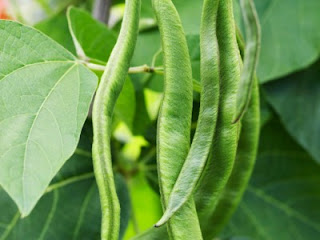
Nothing quite compares to the taste of fresh beans directly out of your own garden. Visually interesting, easy to grow and relatively low maintenance, it is no wonder that these are a gardening favorite. Beans are legumes – that is, plants which grow pods which contain a single row of seeds. It can be argued that the common bean is the most important legume in the world. High in protein, fiber and complex carbohydrates , it is estimated that approximately 18.7 million tons are grown in 150 countries around the globe. There are literally thousands of varieties of the plant, but they all can be divided into two main groups. In one group, you have beans that can be eaten pod and all – such as your typical green bean. This group can be further divided into pole and bush varieties. This group of beans are called snap beans . In the second group, you have beans in which only the seeds are eaten – either fresh or dried (for soups, etc.). These beans are called shell beans. ...
Image
How To Grow Your Own Organic Potatoes In Just 4 Square Feet This method is very simple, can be reused for years and looks great. There’s a new Mr. Potato in town. Last year, the U.S. Department of Agriculture approved a few new genetically modified potato varieties for farmers to grow commercially. There are genetically modified versions of the popular Russet potato and the Atlantic potato, the New York Times reports. It seems like every week another GMO fruit or vegetable is being approved just another good reason to grow your own! Potatoes are fairly low maintenance , can be grown in a pot or in the ground, last a fairly long time if stored properly, and can be very nutritious (high in potassium and vitamin C). Here’s more incentive: according to this article, you can grow 100 pounds of potatoes in 4 sq. feet. According to this article from the Seattle Times, potatoes planted inside a box with this method can grow up to 100 pounds of potatoes in just 4 square fe...
Image
How To Grow Your Own Organic Potatoes In Just 4 Square Feet  This method is very simple, can be reused for years and looks great. There’s a new Mr. Potato in town. Last year, the U.S. Department of Agriculture approved a few new genetically modified potato varieties for farmers to grow commercially . There are genetically modified versions of the popular Russet potato and the Atlantic potato, the New York Times reports. It seems like every week another GMO fruit or vegetable is being approved just another good reason to grow your own! More http://bit.ly/1KxBTl7 'via Blog this'
Image
Gardening, Fresh Food And A Simple Approach To Life – It Works  Yesterday was one of those days that you can only dream about during the long, cold and snowy days of an Ohio Winter. It was simply a perfect day. The sun was shining, the temperatures were in the mid-70’s – and best of all, we both worked in the garden and around the farm from sun up to sun down. It just doesn’t get any better than that – period! I don’t think Mary nor I could ever imagine life without our garden, or our chickens and bees – or anything else that comes with our little 3 acre Old World Garden Farm . But what makes us both even happier is that each and every day, more people from every walk of life are realizing the same thing. They want to plant their first garden, grow some of their own food, and even raise a few chickens for their own eggs. There is something very special about becoming responsible for the food on your table. In addition to the ever-rising cost of fresh food and produce...
Image
How To Grow Food In A Slum: Lessons From The Sack Farmers Of Kibera, Kenya  Farming in a slum, however, inevitably has its complications. Not only is land and space scarce, but finding areas free from contamination can also be a challenge. According to Eva Kadzo, a public health officer and community strategist with the ministry of health, sack farming in Kibera has helped discourage people from planting crops near dump sites and sewers, which had been a common practice in the area. Many of the sewers contain heavy metals such as lead and mercury, creating a health risk to those who consume vegetables grown near them. Joyce Anyango, 30, a mother of three, says becoming an independent sack farmer has changed her life. She makes between $40 and $70 per month from selling her vegetables, and plans to increase her number of sacks to boost her income. “I used to struggle to feed my family,” she says. “However, these days I not only have vegetables readily available, ...
Image
Natural Weed Control For A Healthy Garden  The more we learn about herbicides and pesticides , the more we realize that they’re really bad for both us and the environment. However, you can’t just let the weeds take over either. They’ll steal all of the moisture and nutrients from the soil and your plants won’t thrive. What’s the alternative , though? Is there such a thing as natural weed control for your garden? Yes there is! Pull Them Yeah, I know. Pulling weeds is hard work and in the beginning it’s tough for beginning gardeners to tell the difference between small plants and weeds. However, pulling weeds is the most effective way of getting them out of your garden. You need to be careful that you get the plant and the root or else you’re just wasting your time. More http://bit.ly/1FwS0uS 'via Blog this'
Image
Growing, Preserving And Mixing Your Own Herbs And Spices (Part 2)  It’s certainly true that when it comes to growing herbs and spices, herbs get most of the attention. While pretty much everyone can grow herbs here in the US, only those in warmer zones can grow some of the true spices. But there are spices or seasonings anyone can make — like onion powder. Spices are often more challenging to grow and preserve compared to herbs, but the end result is well worth the extra effort. As a bonus, many of these spices perform double-duty as an herb or vegetable . Easy-to-Grow Spices The following spices tend to be easier to grow and preserve: More http://bit.ly/1IK3zCK 'via Blog this'
Image
Milking Your Animals – Best Practices For The Rookie Farmer  So now you have cows and maybe some goats. All you need to do is go out and ask them nicely to fill your pail with milk , right? We wish it were that easy! There are some things that you need to know about milking before you just go out and grab a stool. We have some tips for beginner farmers about how to milk your animals . How to Keep From Getting Kicked by Your Milk Cow You’ve likely seen horses or mules kick. They kick out behind them but cows don’t; they kick forward. This is especially troublesome when you’re sitting right where they can land a hoof . Even if they miss you, there’s a good chance they’ll get the milk bucket. More http://bit.ly/1F6YOQO 'via Blog this'
Image
‘Guerrilla Gardening’ Takes Root In Hunger-Hit Mali, Africa  On the green banks of the Niger River in downtown Bamako alongside heavily guarded foreign hotels, a group of urban farmers busily weed and water vegetables on some of Mali’s prime real-estate. The “ guerrilla growers ” do not own the land they’re cultivating but property rules aren’t stopping them from trying to feed themselves in one of the world’s poorest countries. In North America and Europe “ guerrilla gardening ” usually means an act of political protest against industrialized food production or a lack of green space but in Bamako and across Africa the growing trend for urban gardens is about survival. More http://bit.ly/1ctxgum 'via Blog this'
Image
Fracking Companies Selling Their Waste Water To Farmers For Our Crops  In the midst of the troublesome California drought, innovation spouts up, invention being the mother of necessity. But just like the aftermath of the BP oil spill , how often are people allowed to actually embark on saving the day, versus the insulting “solutions” foisted on the world by the very corporations responsible for part of the problem? It should not then be surprising that companies like Chevron are extending their magnanimous offer of “crop water” in the form of fracking waste chemicals – for a price, of course. If one didn’t know any better, it almost appears that we are systematically being undercut and sickened to death (she said sarcastically). After all, we already use our own baked sewage sludge to fertilize non-organic crops . And no, the treatment does not stop heavy metals, hundreds of chemicals, drug residues and stomach virus that reside on or within the plants. That’s why the n...
Image
Seed Saving: 5 Nutrient-Dense Vegetables You Should Be Planting Now  When starting a garden , one of the biggest costs is the seeds, but the good news is that you can provide your very own organic seed stock each and every year with a little patience and planning. Being able to collect seeds from your garden is really pretty simple. You just have to plant a few extra individual plants and let them flower and develop the seeds. But make sure that you aren’t relying on every single plant in your garden to provide you with food. Thankfully, plants tend to make a lot of seeds, so even letting one or two “go to seed” should give you more than enough to plant next year. Not all seeds are created equal, though, and it is important to let them mature properly. It is equally important to store them correctly. However, it’s not that difficult to store the seeds for the winter , and you may even be able to stop buying any seeds once you figure out what grows best in your garden. ...
Image
Factory Farming And Modern Food Production Dangers Exposed  Today, obesity and chronic disease is out of control around the world – especially in the United States – with no end in sight. Food allergies, chronic fatigue, heart disease and cancer have many people concerned about their future. So, let’s think about this, could our current food production system and conventional farming techniques be causing all this pain? GMO food producers , like Monsanto, are very upset. They know the general public is waking up to the dangers of our ‘modern’ food production techniques – especially genetically manipulated food ingredients. On the next NaturalNews Talk Hour, find out why GMO seeds , conventional farming and corporate-run food production systems fail to feed the world safely and effectively. This is real ‘insider’ information – rarely discussed anywhere in the world about the future of our food supply. More http://bit.ly/1ySp3tk 'via Blog this'